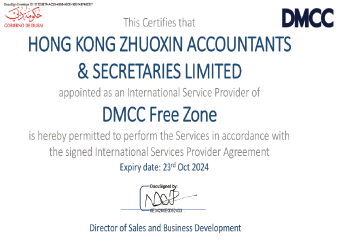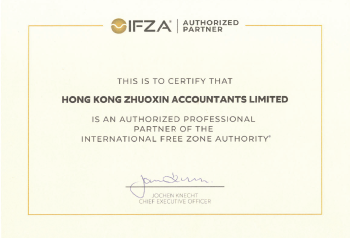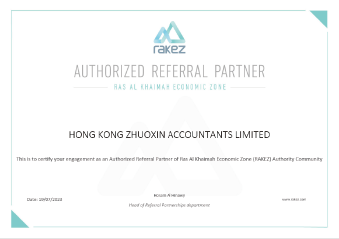
 Time: 2026-08-25
 Author: Zhuoxin Enterprise
 Source: Zhuo Xin
 Views: 1
For foreign investors and B2B service providers, the decision to register company in Dubai represents a strategic move toward accessing one of the world's most dynamic commercial hubs. Dubai's tax-friendly environment, world-class infrastructure, and gateway position between East and West have made it a preferred jurisdiction for company formation. Yet the procedural landscape involves multiple legal frameworks, licensing authorities, and compliance layers that differ significantly from other global business destinations. This analysis provides a structured, practitioner-level view of the entire registration process, from entity selection to post-incorporation obligations, tailored for serious international enterprises.

Choosing the Right Jurisdiction: Mainland, Free Zone, or Offshore
The first and most consequential decision when you register company in Dubai is selecting the appropriate commercial zone. Each category carries distinct operational freedoms, ownership rules, and regulatory oversight. Misalignment between business activities and jurisdiction often leads to costly restructuring later.
Mainland Company Formation
Mainland entities operate under the Dubai Department of Economy and Tourism (DET) and can conduct business anywhere in the UAE, including direct contracts with government bodies. Recent legislative changes have eliminated the mandatory local sponsor requirement for most commercial activities, permitting 100% foreign ownership in over 1,000 business sectors. Mainland registration suits firms that intend to serve the local market, participate in public tenders, or require physical retail or office presence across multiple Emirates. Professional licenses for consultancy, legal, and engineering services fall under this category, often requiring additional approvals from sector-specific regulators.
Free Zone Company Setup
Dubai hosts over 30 specialized free zones, each designed around particular industries such as technology, media, logistics, or finance. Entities incorporated within these zones benefit from 0% corporate tax (subject to specific conditions), 100% capital repatriation, and simplified customs procedures. The key trade-off involves geographic restrictions: free zone companies generally cannot perform business directly within the UAE mainland unless they appoint a local distributor or obtain a separate mainland license. For export-oriented businesses, e-commerce platforms, or regional headquarters serving the MENA region, free zone incorporation offers an efficient pathway to register company in Dubai with minimal bureaucratic friction.
Offshore Company Registration
Offshore structures, typically registered in Ras Al Khaimah (RAK) or Jebel Ali Free Zone (JAFZA), serve as asset-holding vehicles, international trading conduits, or wealth management tools. These entities cannot maintain physical offices within the UAE or conduct onshore commercial activities. Their primary utility lies in international tax planning, real estate ownership (in designated areas), and corporate structuring for multi-jurisdictional operations. While offshore registration is faster and cheaper, it does not confer residence visas—a critical consideration for founders who intend to relocate.
Licensing Categories and Commercial Activity Classification
Every company formation exercise requires a precise classification of business activities, which directly determines the license type and applicable regulatory authority. The DET and individual free zone authorities maintain exhaustive activity lists that map to specific fee structures and compliance requirements.
Commercial licenses cover trading, import-export, and logistics operations. Industrial licenses pertain to manufacturing, assembly, and packaging. Professional licenses are reserved for service providers including consultants, architects, IT developers, and medical practitioners. Tourism licenses cover travel agencies, tour operators, and hospitality services. For firms with diversified revenue streams, it is possible to include multiple activities under a single license, provided they fall within the same regulatory umbrella. The activity selection process demands careful due diligence, as subsequent amendments involve administrative costs and potential re-approval from governing bodies.
Capital Requirements and Shareholding Structure
While the UAE Commercial Companies Law no longer prescribes minimum share capital for most mainland LLCs, certain regulated sectors—banking, insurance, and healthcare—maintain specific capital thresholds. Free zones often require proof of share capital injection, typically ranging from AED 50,000 to AED 1,000,000, depending on the activity and zone policy. This capital must be deposited in a UAE bank account during the incorporation phase and remains subject to audit verification.
Share distribution among founders must be clearly documented in the Memorandum of Association (MOA). For mainland companies, the MOA requires notarization before a Dubai Notary Public, with Arabic translation for all non-Arabic documents. Corporate shareholders are permitted, but additional KYC (Know Your Customer) disclosures apply for ultimate beneficial owners (UBOs). Professional investors often engage local legal counsel to structure shareholding in a manner that optimizes governance while maintaining operational flexibility.
Stepwise Process to Register Company in Dubai
The operational roadmap to register company in Dubai follows a sequential workflow that integrates multiple government platforms and private service providers. Each stage has defined processing times and document prerequisites.
Trade name reservation: Submit proposed names to the relevant authority (DET or free zone regulator). Names must comply with Arabic naming conventions, avoid religious or political references, and include the appropriate legal suffix (LLC, FZCO, etc.).
Initial approval: Obtain a No-Objection Certificate from the regulatory body, confirming the activity and jurisdiction are permissible. This step also triggers the issuance of a preliminary license number used for subsequent applications.
Office tenancy contracting: Secure physical or flexi-desk space as required by the chosen jurisdiction. Mainland entities must provide a Ejari-registered tenancy contract; free zones typically mandate lease agreements with their internal property departments.
MOA and subsidiary documents drafting: Prepare the Memorandum of Association, Articles of Association, and shareholder resolutions in both English and Arabic. For professional licenses, additional practice-specific undertakings are required.
Notarization and attestation: Legalize all documents before the Dubai Notary Public (for mainland) or the free zone's legal affairs department. Shareholders must attend in person or grant a special power of attorney to a local representative.
License issuance and registration: Pay the final fee schedule and collect the trade license. This document serves as the primary authorization to commence business activities.
Bank account opening: Approach licensed UAE banks with the trade license, MOA, and passport copies of shareholders. Banks conduct independent compliance reviews that can take 2-6 weeks depending on the entity's risk profile and transaction volumes.
Visa processing and labour registration: Apply for resident visas, Emirates ID, and work permits for shareholders and employees. The quota is proportional to office space and license type.
In practice, the total timeline from name reservation to license collection ranges between 3-6 weeks for standard commercial activities. Professional service firms with complex ownership structures may require 8-12 weeks due to additional clearances from professional councils. Engaging a specialised consultancy like Zhuo Xin can reduce administrative delays by coordinating document attestation, translation, and government portal submissions simultaneously.
Cost Structure and Recurring Obligations
When budgeting to register company in Dubai, investors must distinguish between initial setup costs and annual renewal expenses. The following components are typical across jurisdictions:
Trade license fees: AED 10,000 – 25,000 per year (mainland) / AED 5,000 – 15,000 (free zone, activity-dependent).
Office space rental: AED 20,000 – 150,000 annually for physical offices; flexi-desk options start at AED 8,000 per year in certain free zones.
Visa processing per person: AED 4,000 – 8,000 including medical tests, Emirates ID, and stamping.
Immigration deposit and establishment card: AED 5,000 – 8,000 (refundable under conditions).
Legal and professional fees: AED 15,000 – 40,000 depending on complexity and use of external counsel.
Annual financial audit: Mandatory for all LLCs and free zone entities; costs range from AED 3,000 to 15,000 based on turnover and auditing firm.
Renewal fees are marginally lower than initial costs, but companies must factor in inflation-adjusted increments imposed by authorities. Late renewal penalties accrue at AED 200-300 per month, with the risk of license cancellation after six months of non-renewal. Additionally, all entities must register for Value Added Tax (VAT) if taxable supplies exceed AED 375,000 within a 12-month period, requiring quarterly return filings and VAT-compliant invoicing systems.
Compliance and Corporate Governance Considerations
Post-incorporation governance is as critical as the setup phase. Dubai's regulatory environment demands meticulous adherence to anti-money laundering (AML) regulations, economic substance reporting, and ultimate beneficial ownership disclosure. The UAE's AML framework requires all companies to appoint a compliance officer, maintain transaction logs, and file suspicious activity reports with the Financial Intelligence Unit. Free zone entities must also comply with their zone-specific regulations, which often include additional reporting on employee headcount and operational activities.
For foreign shareholders who do not reside in the UAE, the appointment of a local manager or an authorised signatory becomes necessary for banking and government transactions. This individual must hold a valid UAE residence visa and be named in the company's establishment card. Zhuo Xin frequently advises international clients on structuring local representation to avoid operational bottlenecks while retaining full ownership and strategic control.
Corporate tax at 9% (applicable to taxable profits exceeding AED 375,000) came into effect for financial years starting on or after 1 June 2023. This has prompted many businesses to re-evaluate their transfer pricing policies, inter-company arrangements, and expense recognition methodologies. Free zones that meet the conditions of the Qualifying Income Regime can benefit from a 0% rate, but careful documentation of substance requirements (adequate physical assets, employees, and board meeting records) is mandatory to maintain this preferential status.
Common Operational Pitfalls and Mitigation Strategies
Even experienced investors encounter challenges when they register company in Dubai. Awareness of these pitfalls allows for proactive countermeasures:
Activity mismatch: Selecting a broad activity code to avoid future amendments often backfires, as regulators may refuse renewal or require additional approvals. Solution: define the primary revenue-generating activities precisely and incorporate secondary activities through a supplementary list if permitted.
Bank account rejection: UAE banks apply strict client onboarding criteria, particularly for high-risk sectors or complex ownership chains. Solution: prepare a comprehensive business plan, financial projections, and source-of-funds evidence before approaching banks. Some free zones offer facilitated banking partnerships that streamline this step.
Visa quota insufficiency: Office space dimensions determine the number of sponsored visas. Underestimating headcount growth can force premature relocation. Solution: negotiate flexible office lease clauses that allow for expansion within the same building, or consider co-working memberships that offer scalable desk allocations.
Absence of a local service agent: For certain professional activities (e.g., legal, accounting), a UAE national must serve as a local service agent, albeit without ownership rights. Solution: engage a reputable agency with transparent service agreements that clearly delineate roles and fee structures.
These operational risks underscore the value of partnering with advisory firms that maintain direct relationships with regulators and financial institutions. Zhuo Xin has developed standardised checklists and document libraries that reduce the likelihood of application rejection and subsequent resubmission delays.
Frequently Asked Questions on Company Registration in Dubai
What are the minimum requirements to register company in Dubai as a foreigner?
Foreign nationals require a valid passport, a no-objection certificate from their current sponsor (if residing in the UAE), and a clear business plan detailing the proposed activity. Depending on the jurisdiction, shareholders must attend in person for notarisation or execute a power of attorney before a UAE embassy or notary public in their home country. There is no nationality restriction for most commercial and professional licenses, though certain regulated sectors (e.g., military contracting, defence supplies) remain restricted to UAE nationals or GCC entities.
Can I register company in Dubai and operate remotely without relocating?
Yes. Many free zones and the DET permit remote incorporation through digital platforms, with electronic signatures accepted for certain documents. However, opening a corporate bank account and obtaining visas still require physical presence or a local representative with power of attorney. For non-resident shareholders, virtual office solutions and remote notarisation options are increasingly available, although legal practitioners recommend maintaining a local contact person to handle regulatory correspondence.
How long does the company registration process typically take?
For straightforward commercial activities in free zones, the process can be completed in 7-14 working days from name reservation to license issuance. Mainland registration extends to 15-30 working days due to additional notarisation and DET approvals. Complex structures involving professional councils (e.g., healthcare, engineering) or multiple shareholders with intricate shareholding ratios may extend to 45-60 working days. These timelines assume all documents are submitted correctly and no queries arise from the issuing authority.
What are the ongoing compliance obligations after registration?
Annual licence renewal, financial statement audit, VAT reporting (if applicable), and AML compliance are mandatory for all active entities. Additionally, mainland companies must file economic substance declarations with the Ministry of Finance, particularly if they engage in relevant activities such as intellectual property holding, distribution, or insurance. Free zone entities follow similar protocols but are subject to zone-specific audit and reporting calendars. Missing any deadline triggers penalties and, in extreme cases, suspension of trade license.
Is it possible to convert a free zone license to a mainland license later?
Conversion is legally permissible but operationally involved. The process requires liquidating the free zone entity, settling all outstanding liabilities, and applying for a new mainland license from DET. This entails fresh trade name reservation, MOA notarisation, and office space contracting. In practice, most businesses opt to establish a separate mainland entity while retaining the free zone company for export activities, thereby maintaining two distinct operational vehicles. Tax advisors can model the cost-benefit of such dual-structure approaches.
Final Steps and Authoritative Support
The decision to register company in Dubai initiates a journey that extends far beyond obtaining a trade license. Sustained success depends on navigating the interlocking systems of immigration, banking, taxation, and industry-specific regulation. International enterprises benefit from engaging advisors who not only facilitate the initial registration but also provide post-incorporation support including PRO (Public Relations Officer) services, VAT agency, and payroll administration. The cost of non-compliance or administrative oversight far outweighs the investment in professional guidance.
For B2B organisations seeking a reliable partner to manage the entire lifecycle of Dubai company formation, Zhuo Xin offers end-to-end solutions tailored to your industry, projected scale, and regional growth strategy. Our team combines in-house legal expertise with direct access to all relevant government portals, ensuring your application proceeds without unnecessary friction.
Contact Zhuo Xin today to schedule a confidential consultation. Share your business activity, preferred jurisdiction, and ownership structure, and receive a customised roadmap that includes precise cost estimates, timeline projections, and compliance checklists. Secure your place in Dubai's competitive marketplace with a registration process that meets international standards of transparency and efficiency