 Time: 2026-08-21
 Author: Zhuoxin Enterprise
 Source: Zhuo Xin
 Views: 1
Establishing an international presence requires balancing speed to market, legal autonomy, and fiscal efficiency. The United Arab Emirates has created a regulatory environment designed to attract cross-border enterprise, foreign direct investment, and trade facilitation. Among the available market entry routes, a business setup in dubai free zone offers multinational corporations and private investors 100% foreign ownership, full capital repatriation, and access to world-class logistics infrastructure.
Navigating the ecosystem of more than 30 distinct free zones requires a structured understanding of commercial laws, operational parameters, and long-term tax implications. Selecting the right jurisdiction dictates not only your initial licensing process but also your corporate banking approval rate, visa quotas, and eligibility for corporate tax exemptions. This document outlines the administrative, legal, and operational mechanics required to incorporate and scale an entity successfully.
Jurisdictional Selection and Free Zone Categories
Every free zone authority operates under independent civil and administrative regulations, governed by its respective regulatory body. Determining the optimal location depends directly on your primary business activities, physical space requirements, and international supply chain integrations.
Commercial and Commodity-Focused Jurisdictions
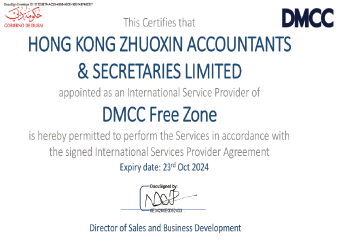
Entities engaged in global trading, professional services, software architecture, or raw commodities typically prioritize commercial hubs. The Dubai Multi Commodities Centre (DMCC), for instance, serves as a global center for commodity trading and technology firms. It provides advanced digital governance, access to precious metals and agricultural exchanges, and comprehensive infrastructure for institutional trading operations.
Logistics and Industrial Centers
For import, export, assembly, and heavy warehousing, zones connected directly to sea and air transit hubs offer clear operational advantages. The Jebel Ali Free Zone (JAFZA) borders one of the world's largest container ports, providing integrated customs clearing, bonded warehouse options, and direct distribution lines across the Middle East, Africa, and South Asia. Similarly, Dubai Airport Freezone (DAFZA) accommodates high-value, time-sensitive cargo operations such as aviation components, pharmaceuticals, and luxury electronics.
Regulated Financial Centers
The Dubai International Financial Centre (DIFC) operates under an independent common law framework with its own judicial system and financial services authority (the DFSA). It is tailored specifically for investment banks, wealth managers, private equity houses, fintech scale-ups, and corporate holding entities requiring institutional-grade legal certainty comparable to London or Singapore.
Service and Media Hubs
Service-oriented firms, digital marketing agencies, media houses, and advisory practices frequently gravitate toward Dubai Media City, Dubai Internet City, or dynamic flexible zones like IFZA and Meydan Free Zone. These jurisdictions offer streamlined remote incorporation, competitive office solutions, and flexible visa allocations for consultancies and remote-first operations.
Legal Entity Structures and Licensing Frameworks
Before initiating corporate registration, the founding members must determine the formal corporate vehicle. Free zone authorities accommodate three primary corporate forms:
Free Zone Establishment (FZE): Formed with a single individual or corporate shareholder, creating a separate legal personality with limited liability.
Free Zone Company (FZCO / FZ-LLC): Formed by two or more shareholders (up to 50, depending on the zone), operating with limited liability and structured share capital.
Branch of a Foreign or Local Company: An extension of an existing parent company. A branch does not constitute a separate legal entity; the parent company remains fully liable for all operations and contracts entered into by the branch.
The choice of legal entity aligns with specific business activities categorized under standardized activity lists aligned with the International Standard Industrial Classification (ISIC). Licensing falls into four core branches:
Commercial / Trading License: Authorizes the import, export, distribution, consolidation, and storage of designated goods.
Service / Professional License: Permits consultancies, engineering practices, marketing firms, and intellectual property management.
Industrial License: Required for manufacturing, processing, packaging, and raw material assembly within designated plots or light industrial units.
Holding Company License: Structured to hold shares, intellectual assets, real estate, or equity stakes in subsidiary operational companies globally.
Procedural Steps for Business Setup in Dubai Free Zone
The execution of a compliant business setup in dubai free zone follows a sequential regulatory workflow. Adhering to each procedural gate prevents delays in licensing and corporate tax registration.
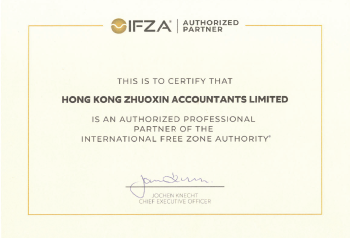
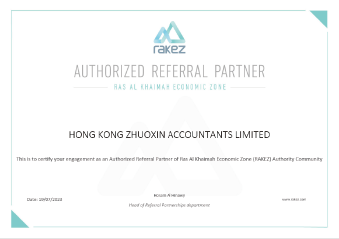
Consulting firms such as Zhuo Xin assist cross-border enterprises in coordinating multi-jurisdictional documentation, securing preliminary approvals, and aligning corporate charters with local statutory standards.
1. Initial Approval and Trade Name Reservation
The process begins by submitting proposed trade names to the relevant free zone authority. Names must adhere to moral and legal guidelines, avoiding religious connotations, political affiliations, or trademark infringements. Concurrently, the authority performs initial background checks on the ultimate beneficial owners (UBOs) and key managers to issue an Initial Approval Certificate.
2. Drafting Constitutional Documents and Legalization
The company’s Memorandum of Association (MoA) and Articles of Association (AoA) must be drafted to outline shareholder rights, voting thresholds, profit distribution protocols, and board governance. If the shareholder is a foreign corporate entity, its parent documents (Certificate of Incorporation, Board Resolution, Power of Attorney, and Good Standing Certificate) must undergo notarization and consular legalization in the country of origin, followed by attestation by the UAE Ministry of Foreign Affairs (MOFA).
3. Real Estate and Lease Allocation
UAE regulations require every licensed entity to maintain a valid physical address within the issuing jurisdiction. Free zones accommodate varying enterprise sizes through distinct lease classifications:
Flexi-Desk / Smart Office: Shared work stations suitable for consultancies and service companies requiring minimum visa allocations.
Dedicated Private Office: Fully partitioned corporate offices providing higher visa quotas based on allocated floor area (typically 8–10 square meters per visa).
Warehousing and Industrial Plots: Purpose-built shell-and-core or fully fitted industrial storage facilities with dedicated three-phase power and loading docks.
4. License Issuance and Establishment Card
Upon finalization of the lease agreement and settlement of administrative fees, the authority issues the Commercial License and Chamber of Commerce registration. Following this, the company applies for an Establishment Card through the General Directorate of Residency and Foreigners Affairs (GDRFA), allowing the business to issue entry permits and residence visas for directors, investors, and employees.
Taxation, Economic Substance, and Regulatory Compliance
The UAE has modernized its fiscal framework to align with OECD Inclusive Framework standards on Base Erosion and Profit Shifting (BEPS). Investors structuring their business setup in dubai free zone must navigate several distinct compliance layers to maintain favorable tax positioning.
UAE Corporate Tax Application
Under Federal Decree-Law No. 47 of 2022 on the Taxation of Corporations and Businesses, the standard corporate tax rate is 9% on taxable income exceeding AED 375,000. Free zone entities can achieve the status of a Qualifying Free Zone Person (QFZP) to benefit from a 0% tax rate on "Qualifying Income."
To qualify for the 0% rate, the business must:
Derive income from transactions with other free zone persons or from qualifying activities defined by ministerial decisions (e.g., manufacturing, treasury services, ship operations, reinsurance).
Maintain adequate economic substance in the UAE (adequate full-time staff, physical assets, and operational expenditures).
Comply with transfer pricing documentation rules and arm’s-length standards (maintaining Local and Master Files where thresholds apply).
Refrain from electing to be subject to the standard 9% corporate tax regime.
Prepare audited financial statements in compliance with International Financial Reporting Standards (IFRS).
Value Added Tax (VAT) Considerations
A standard 5% VAT rate applies to the supply of taxable goods and services in the UAE. Free zones fall into two categories for VAT purposes:
Designated Free Zones: Specific, fenced areas with customs control treated as outside the UAE territory for VAT on certain goods movements.
Non-Designated Free Zones: Treated as mainland UAE for all VAT regulations.
Mandatory VAT registration is required once taxable supplies and imports exceed the threshold of AED 375,000 within a 12-month period, while voluntary registration is accessible at AED 187,500.
Ultimate Beneficial Ownership (UBO) and Anti-Money Laundering (AML)
Entities must maintain a Register of Beneficial Owners and a Register of Partners/Shareholders under Cabinet Resolution No. 109 of 2023. Real-time updates must be filed with the registrar to avoid administrative penalties. Companies dealing in precious metals, real estate, accounting, or corporate services must also comply with goAML reporting requirements and suspicious transaction reporting protocols.
Corporate Banking Onboarding Strategy
Opening a corporate bank account in the UAE is an intensive compliance exercise. Local and international financial institutions implement strict Know Your Customer (KYC) and Source of Wealth (SoW) checks overseen by the Central Bank of the UAE.
Financial institutions evaluate several core factors before approving an account:
Clear Commercial Profile: A documented business model with verifiable suppliers, buyers, signed invoices, letters of intent, or executed contracts.
Management Track Record: Demonstrable professional experience of the UBO and signatories, validated via resumes, portfolio websites, and external corporate references.
Substantive Banking History: Personal and corporate bank statements for the past 6 to 12 months from the home country or existing international businesses.
Local Economic Substance: Physical workspace leases, local utility bills, and residency visas for the primary signatories significantly shorten review timelines.
Collaborating with established international corporate advisory teams like Zhuo Xin helps companies organize multi-jurisdictional compliance files to meet the underwriting standards of tier-one UAE banks.
Cost Elements of Free Zone Company Formation
A well-planned business setup in dubai free zone requires a transparent overview of initial capital expenditures and ongoing annual renewal costs. Budgeting accurately across all regulatory categories ensures operational liquidity.
Authority Registration and Licensing: Government registration fees, trade name approvals, and annual license fees (typically ranging from AED 11,000 to AED 50,000 depending on activity and jurisdiction).
Commercial Workspace Costs: Annual rent for virtual flexi-desks, physical executive offices, or industrial land leases.
Visa Allocations and Immigration Processing: Establishment card issuance, entry permits, medical fitness examinations, Emirates ID card biometrics, and residency stamping fees per person.
Statutory Audits and Legal Compliance: Mandatory annual audits, accounting maintenance under IFRS, and corporate tax return filings.
Banking and Security Deposits: Share capital requirements (where mandated by the free zone authority) and minimum average balance requirements dictated by commercial banks.
Frequently Asked Questions
Can a free zone company trade directly with mainland UAE companies?
A free zone company can provide services or sell goods to mainland entities provided specific structures are followed. For physical goods, the transfer must clear customs through a licensed mainland distributor, customs broker, or logistics agent with payment of applicable 5% customs duties. For professional services, free zone entities can deliver services directly to mainland B2B clients, provided the work is executed within the free zone or virtually, adhering to UAE corporate tax and VAT regulations.
What is the minimum share capital required for a business setup in Dubai free zone?
Minimum share capital varies significantly across free zones. Certain jurisdictions, such as IFZA or Meydan, require no paid-up capital upfront, allowing formation with nominal share capital. Other hubs, such as DMCC, require a minimum share capital (typically AED 50,000 per company), while DIFC entities or financial practices face higher capital requirements based on their regulatory category. In many zones, share capital does not need to be locked permanently and can be utilized for operational expenditures post-incorporation.
How long does the entire incorporation and residency visa process take?
The standard timeline for commercial license issuance ranges from 3 to 10 working days, depending on whether specialized external approvals are required. Once the license and establishment card are issued, the residency visa process—including entry permit issuance, in-country status change, medical fitness screening, and Emirates ID biometric capture—generally requires an additional 7 to 14 business days.
Is an annual financial audit mandatory for all free zone entities?
Most premier free zones (such as DMCC, JAFZA, and DAFZA) mandate the submission of an audited financial report prepared by a UAE-registered auditor upon annual license renewal. Under UAE Corporate Tax regulations, entities intending to maintain Qualifying Free Zone Person (QFZP) status to access the 0% corporate tax rate must prepare and maintain audited financial statements regardless of specific free zone exemptions.
Can a foreign investor establish a company without visiting Dubai?
The initial corporate registration and license issuance can be executed remotely through digital verification and authorized representation. The foreign shareholder or authorized signatory must, however, enter the UAE to complete medical examinations, Emirates ID biometrics, and mandatory banking verification interviews to finalize residency and corporate bank account activation.
Initiate Your UAE Market Entry
Executing an international expansion demands precise legal coordination, structured jurisdictional selection, and adherence to evolving fiscal mandates. Zhuo Xin provides comprehensive corporate formation, statutory accounting, and cross-border advisory services to ensure your business setup in dubai free zone is fully aligned with regional standards and commercial objectives.
Connect with our senior corporate advisory team to receive a tailored structural evaluation, licensing schedule, and complete compliance roadmap for your UAE expansion.