 Time: 2026-10-29
 Author: Zhuoxin Enterprise
 Source: Zhuo Xin
 Views: 1
Establishing an operational footprint in the United Arab Emirates has evolved from an opportunistic expansion tactic into a calculated strategic necessity for cross-border enterprises. Positioned at the convergence of Europe, Asia, and Africa, Dubai offers unparalleled access to developing and developed markets alike. Translating this geographic advantage into an enduring operational asset demands a deep understanding of corporate architecture, statutory requirements, and administrative frameworks. Executing company formation and licensing in dubai requires deliberate navigation through jurisdictional parameters, regulatory prerequisites, and post-incorporation statutory compliance. Global business leaders must dissect every layer of the setup process to establish an entity that is legally resilient, commercially agile, and fully aligned with international tax governance standards.
The Jurisdictional Triad: Mainland, Free Zone, and Offshore Architectures
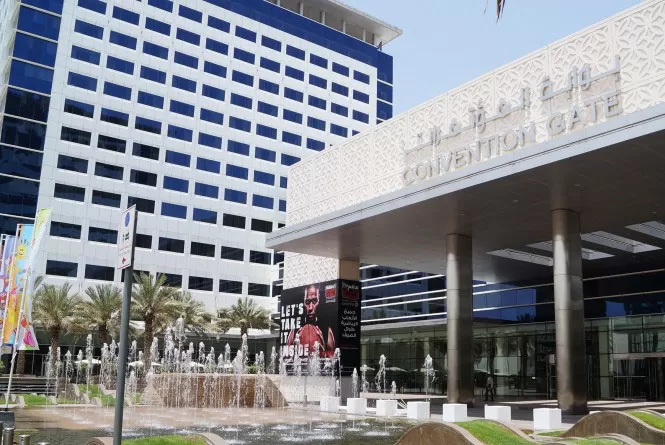
Every commercial venture in the emirate begins with a fundamental structural choice: selecting the governing jurisdiction. Dubai separates commercial enterprises into three distinct classifications, each dictated by specific governing bodies, geographical boundaries, and operational scopes.
Mainland Establishments (Onshore Entities)
Entities incorporated within the Dubai mainland fall under the regulatory authority of the Department of Economy and Tourism (DET). Historically governed by restrictive foreign ownership caps, recent legislative shifts under Federal Decree-Law No. 32 of 2021 on Commercial Companies have transformed the mainland landscape. International investors can now maintain 100% foreign ownership across thousands of commercial, industrial, and service activities without appointing an Emirati majority shareholder.
- Direct access to the local UAE domestic market and government procurement contracts without intermediary distribution agencies.
- Unrestricted commercial real estate selection across the entire geography of the emirate.
- Freedom to operate onshore while maintaining the capacity to deliver international services across borders.
Free Zone Frameworks
Dubai hosts over thirty distinct free trade zones, each developed around specific economic sectors ranging from commodities and maritime operations to digital assets, finance, and media. Prominent zones include the Dubai Multi Commodities Centre (DMCC), the Dubai International Financial Centre (DIFC), and the Dubai Airport Freezone (DAFZA). These zones operate under independent regulatory frameworks, offering specialized commercial infrastructure and dedicated administrative channels.
- Complete repatriation of capital and operational profits to foreign parent entities.
- Customs exemptions on goods imported into the designated free zone boundaries.
- Pre-packaged real estate, shared service solutions, and streamlined visa processing pipelines.
- Operational boundaries that generally restrict direct consumer trade inside the mainland UAE market unless conducted through a mainland distributor or licensed commercial agent.
Offshore Entities (International Business Companies)
Offshore incorporations—primarily registered under the Jebel Ali Free Zone (JAFZA Offshore) or Ras Al Khaimah International Corporate Centre (RAK ICC) frameworks—serve asset protection, intellectual property holding, and international trade facilitation purposes. These vehicles do not obtain physical operational substance inside the country, cannot sponsor local residence visas, and are barred from conducting active onshore trade within the UAE domestic market.
Categorization of Commercial Permissions: Understanding Trade Licenses
A corporate entity cannot commence commercial interactions until it acquires an authorized operating credential issued by the relevant regulatory authority. Structuring company formation and licensing in dubai correctly hinges on aligning specific commercial operations with standard activity classifications.
Commercial Licenses
Assigned to enterprises engaged in the buying, distributing, and selling of tangible commodities. This license category covers generalized import-export frameworks, specialized distribution pipelines, and logistics entities. Operating an import-export firm through a commercial license necessitates registration with Dubai Customs to secure an importer code, linking the license to the global supply chain.
Professional Licenses
Designed for organizations providing intellectual, diagnostic, consulting, or technical proficiencies. Historically requiring the appointment of a local service agent to handle administrative liaisons, professional licenses now frequently allow complete foreign control depending on the specific activity scope. The underlying value of a professional license lies in its targeted focus on service-based revenue models, including engineering consultancy, corporate management, legal services, and digital marketing.
Industrial Licenses
Reserved for organizations undertaking industrial manufacturing, processing, assembly, and conversion of raw inputs into finished products. Industrial setups require physical warehousing or production real estate within designated industrial sectors, alongside approvals from the Ministry of Industry and Advanced Technology (MoIAT), the Dubai Civil Defense, and the Dubai Municipality to ensure environmental, safety, and infrastructure compliance.
Specialized and Regulated Permissions
Entities venturing into targeted sectors face multi-tiered regulatory scrutiny before license finalization. Financial service providers must clear regulatory gateways set by the Dubai Financial Services Authority (DFSA) or the Central Bank of the UAE. Medical, pharmaceutical, and health-tech operators report directly to the Dubai Health Authority (DHA). Education providers require clearance from the Knowledge and Human Development Authority (KHDA). Failure to harmonize primary corporate filings with these external approvals creates administrative deadlocks, delaying market entry schedules.
Procedural Architecture for Establishing an Enterprise
Executing an onshore or free zone incorporation requires systematic progression through administrative and legal milestones. Missing structural details at the initial phase can trigger administrative bottlenecks during downstream activities, particularly during real estate lease registration or corporate banking onboarding.
- Activity Delineation and Legal Structuring: Define operational activities using the unified industrial classification codes. Select the corporate form, typically a Limited Liability Company (LLC) or a Branch Office of an overseas enterprise.
- Trade Name Reservation: Secure a trade name conforming to linguistic, legal, and operational standards set by the licensing registry. Names referencing sovereign entities, non-compliant social conventions, or established global trademarks are strictly denied.
- Initial Approval Acquisition: Obtain initial clearance from the DET or the respective Free Zone Authority, confirming no statutory impediments prevent the founders from creating the legal entity.
- Drafting Statutory Documentation: Draft and notarize the Memorandum of Association (MOA) and Articles of Association (AOA). Onshore structures complete this notarization digitally or physically before a recognized UAE Notary Public, while free zones utilize standardized internal charter templates.
- Physical Premises and Ejari Certification: Acquire compliant physical infrastructure. Dubai law mandates a physical office lease or an authorized flexi-desk agreement for commercial entities. Onshore leases must be registered in the government Ejari system to validate the lease contract, which provides verification for employment visa allocations.
- Final Regulatory Approval and Issuance: Submit proof of lease registration, notarized constitutional documents, and statutory stakeholder approvals to the registrar. Upon settlement of administrative fees, the authority releases the formal commercial license, chamber of commerce registration, and the corporate establishment card.
International corporate groups frequently engage Zhuo Xin to manage this deployment. Retaining dedicated corporate advisory services mitigates structural misalignment, maintains document parity across parent entities, and streamlines the conversion of cross-border legal instruments for local regulatory use.
Critical Phases in Company Formation and Licensing in Dubai
Transitioning from administrative licensing to full commercial operation requires solving operational and statutory governance challenges. Establishing the legal entity is merely the initial phase; maintaining operational legitimacy requires ongoing compliance with federal frameworks.
The Realities of Corporate Bank Account Provisioning
The global elevation of Anti-Money Laundering (AML) and Counter-Terrorism Financing (CFT) standards has made corporate banking the most challenging operational milestone for newly formed entities in Dubai. Financial institutions operate under strict risk-assessment protocols governed by the Central Bank of the UAE.
Banks no longer approve accounts based solely on license presentation. Corporate applicants must present documented evidence of real economic substance, validated customer and vendor counterparties, transparent source-of-wealth documentation for the ultimate beneficiaries, and documented transaction pipelines. Entities failing to establish adequate physical presence, local operating costs, or credible regional commercial activities face prolonged account reviews or complete application denials.
Federal Corporate Tax and Statutory Filings
The implementation of Federal Decree-Law No. 47 of 2022 on the Taxation of Corporations and Businesses radically altered the fiscal environment of the UAE. Operating an enterprise requires proactive alignment with this corporate tax structure:
- Standard corporate tax sits at an competitive 9% on taxable income exceeding AED 375,000, with income up to that threshold subject to a 0% rate.
- Free Zone Persons meeting the criteria for a Qualifying Free Zone Person (QFZP) can access a 0% rate on qualifying income, provided they maintain operational economic substance, preserve statutory transfer pricing documentation, and avoid conducting non-qualifying business with the mainland.
- Every licensed entity, regardless of profitability, jurisdiction, or operational activity, must register for Corporate Tax with the Federal Tax Authority (FTA) and file an annual return.
Regulatory Governance: UBO and Economic Substance Standards
Dubai holds businesses accountable to international transparency norms via Cabinet Resolution No. 109 of 2020 on Ultimate Beneficial Ownership (UBO). Companies must maintain a real-time register of beneficial owners holding an indirect or direct interest of 25% or more, alongside a register of nominee directors. Parallel to this, Economic Substance Regulations (ESR) mandate that entities carrying out specific relevant activities (such as distribution and service center business, headquarters business, and intellectual property holdings) show physical premises, qualified full-time personnel, and operating expenditures located directly within the UAE.

Strategic Enterprise Implementation with Zhuo Xin
Navigating the convergence of local municipal licensing, federal fiscal compliance, and international corporate governance requires specialized administrative precision. As cross-border regulatory demands increase, establishing an enterprise in the Middle East demands more than basic agency document processing. Zhuo Xin provides strategic guidance tailored to global corporations, institutional funds, and international investors entering the UAE market.
Enterprise success hinges on anticipating statutory changes, setting up efficient ownership architectures, and maintaining compliance across all operational jurisdictions. By engaging Zhuo Xin to handle the nuances of company formation and licensing in dubai, businesses establish structures engineered to withstand regulatory scrutiny while supporting cross-border growth. Institutional advisors manage local authority interactions, verify legal document harmonization, and streamline post-incorporation setup, freeing leadership teams to focus on market capture and business performance.
Frequently Asked Questions
Can a foreign investor maintain 100% equity ownership in a Dubai mainland entity?
Yes. Following amendments to the UAE Commercial Companies Law, foreign investors can establish and maintain 100% ownership of mainland Limited Liability Companies across an extensive range of commercial and industrial activities. Some activities with direct strategic impact—such as defense, security, and specific oil and gas sectors—still require local partner participation or specialized ministerial sanction.
What distinguishes a Qualifying Free Zone Person from a standard Free Zone entity under Corporate Tax law?
A Qualifying Free Zone Person (QFZP) is an entity incorporated in a Free Zone that satisfies specific criteria under Federal Decree-Law No. 47 of 2022: maintaining adequate economic substance in the UAE, deriving qualifying income from allowable activities or transactions with other Free Zone persons, complying with arm’s length transfer pricing rules, and auditing annual financial statements. Meeting these benchmarks allows the entity to benefit from a 0% tax rate on qualifying revenue. Standard entities failing these provisions face the conventional 9% tax rate on their taxable profits.
How long does the incorporation and licensing workflow take from start to finish?
Incorporation timeframes depend on jurisdictional choice and external approval requirements. Standard free zone company formations without external regulatory clearance generally complete within five to ten business days. Mainland LLC setups typically require seven to fourteen business days, assuming all shareholder identification and legal documentation are properly notarized and attested. Entities requiring specialized regulatory oversight (such as DHA, DFSA, or Civil Defense) operate on broader project timelines determined by municipal inspection and review schedules.
What physical real estate mandates apply to new commercial licenses?
Dubai operational rules mandate that every active company hold an approved commercial address. Mainland companies must secure physical office premises, commercial space, or a dedicated warehouse, formalizing the lease via an Ejari registration certificate. Free zones provide flexible alternatives, ranging from hot-desk solutions and private executive suites to industrial plots. Purely virtual registrations without designated workspace allocations are broadly restricted, especially for companies sponsoring expatriate employment visas or seeking corporate bank accounts.
What documentation is required to open a corporate bank account in the UAE?
Financial institutions demand an exhaustive compliance dossier before opening an account. Requirements typically include the operational trade license, Certificate of Incorporation, Memorandum and Articles of Association, Ejari lease registration, clear utility records, comprehensive curriculum vitae of the ultimate beneficial owners, and past bank statements from corporate or personal parent accounts. Banks will also ask for verified counterpart documentation, such as draft client contracts, supplier pro-forma invoices, detailed commercial flowcharts, and corporate business plans proving regional operational substance.
Initiate Your Corporate Expansion
Expanding your enterprise into Dubai provides direct access to high-growth regional and global markets, supported by an advanced commercial and legal ecosystem. Successfully establishing this operational presence requires a corporate foundation engineered to meet local regulatory standards and international tax transparency requirements.
Contact our advisory team today to discuss your expansion plans, assess jurisdictional suitability, and establish a clear plan for your company formation and licensing in dubai. Submit your project requirements to initiate an introductory technical consultation with our corporate services team.