 Time: 2026-10-30
 Author: Zhuoxin Enterprise
 Source: Zhuo Xin
 Views: 1
The Emirate of Fujairah holds an exceptional geostrategic position within the United Arab Emirates. Situated exclusively along the Gulf of Oman, outside the maritime chokepoint of the Strait of Hormuz, the emirate serves as a vital logistics, bunkering, and commercial nexus connecting the Middle East, the Indian subcontinent, Africa, and East Asia. For multinational corporations, maritime operators, commodity traders, and service providers, undertaking company formation in Fujairah represents an opportunity to leverage advanced port infrastructure, cost-efficient corporate licensing, and progressive business frameworks.
Executing an enterprise expansion into this region requires a granular understanding of regional administrative bodies, entity classifications, and the evolving federal regulatory ecosystem. Aligning a corporate vehicle with long-term commercial goals involves evaluating logistical corridors, corporate tax liabilities, economic substance mandates, and foreign ownership parameters across distinct jurisdictions.
Geostrategic and Macroeconomic Foundations of Fujairah
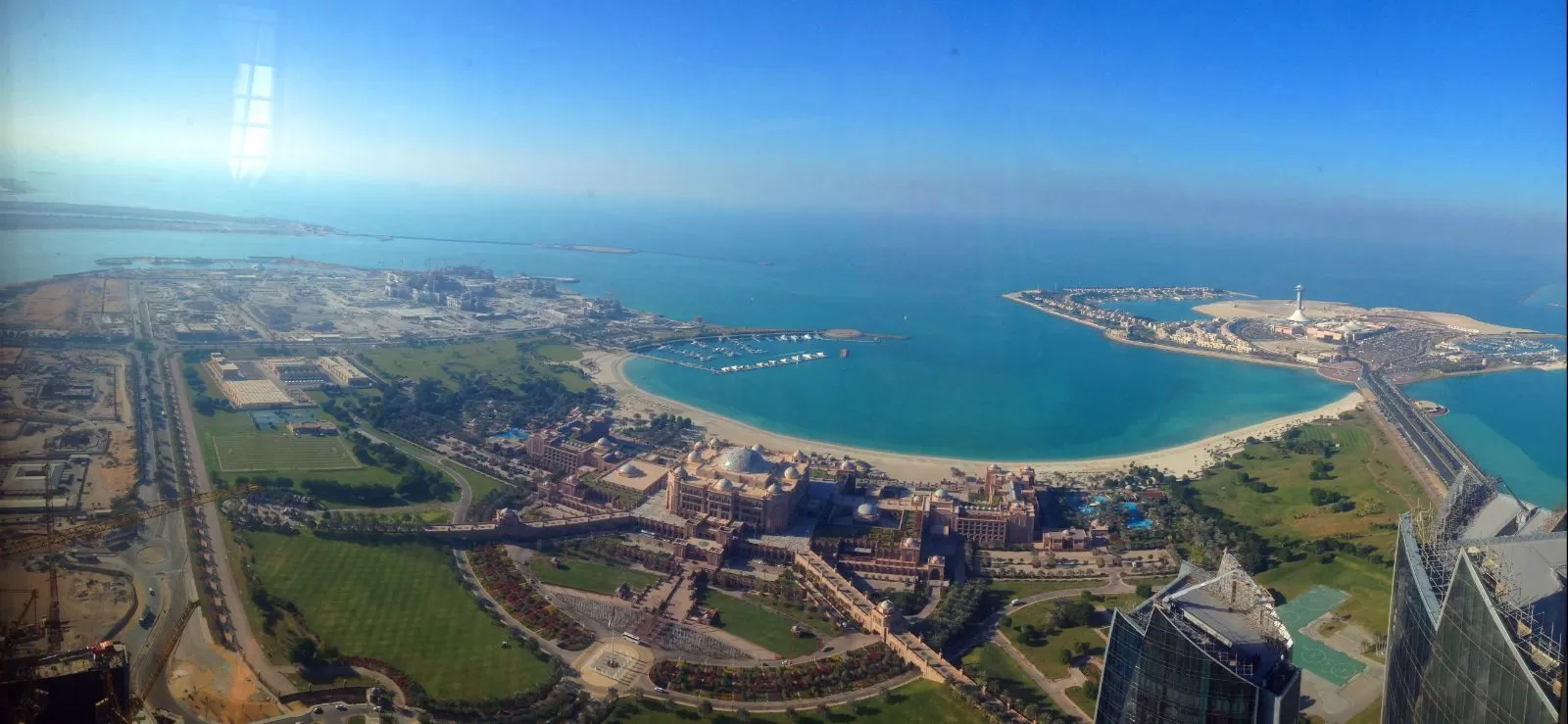
The economic footprint of Fujairah is intrinsically tied to global maritime trade and industrial infrastructure. The Port of Fujairah ranks consistently among the top bunkering hubs globally, alongside Singapore and Rotterdam. Its deep-water berths, extensive crude oil storage terminals, and specialized liquid bulk handling facilities make it the premier conduit for energy exports bypassing the Persian Gulf. This maritime dominance generates immense ancillary demand across technical ship services, maritime insurance, customs brokerage, and supply chain management.
Beyond maritime activities, the emirate has invested significantly in overland logistical integration. The Etihad Rail network directly links Fujairah’s industrial and port terminals with the industrial centers of Abu Dhabi, Dubai, and the broader GCC railway framework. Highway infrastructure provides rapid vehicular transit across the Hajar Mountains to the commercial markets of Sharjah and Dubai within ninety minutes. Enterprise decision-makers leverage these multimodal logistics links to establish low-overhead regional distribution hubs that service both the domestic UAE market and global export destinations.
Jurisdictional Frameworks: Free Zones Versus Mainland
Determining the optimal regulatory environment is the foundational decision when planning company formation in Fujairah. The emirate provides distinct jurisdictional choices: specialized free trade zones and the mainland jurisdiction governed by the Fujairah Department of Economic Development (Fujairah DED). Each framework caters to specific commercial profiles, operational footprints, and target customer bases.
Fujairah Free Zone Authority (FFZA)
The Fujairah Free Zone Authority borders the Port of Fujairah, delivering immediate physical proximity to maritime berths and international shipping lanes. This jurisdiction is designed primarily for enterprises engaged in heavy industry, manufacturing, bulk commodity trading, warehousing, logistics, and maritime support services. Entities registered under the FFZA benefit from streamlined customs processing, specialized physical land leases, built-to-suit warehousing facilities, and full exemption from federal import and export duties within the free zone customs enclave.
Creative City Free Zone
In contrast to the heavy-industry focus of the FFZA, the Fujairah Creative City Free Zone operates as a specialized hub for media, consultancy, technology, professional advisory services, and digital commerce. Creative City provides corporate structures that do not mandate physical warehousing or expansive manufacturing plots. Its regulatory model permits flexi-desk and virtual office arrangements, lowering startup expenditures and operational overhead for professional services firms, holding companies, and global consultancies targeting international markets.
Fujairah Mainland (DED)
Establishing an entity under the Fujairah Department of Economic Development allows an enterprise to operate without geographical limitation across the domestic UAE market. A mainland entity can bid directly on municipal and federal government procurement contracts, execute commercial leases anywhere in the emirate, and engage directly in local retail, construction, and engineering works. Following federal reforms to the UAE Commercial Companies Law, the historical requirement for a local national shareholder owning 51% equity has been removed for the vast majority of commercial and industrial activities, granting international investors 100% foreign equity ownership on the mainland.
Corporate Structures and Licensing Frameworks
Selecting the appropriate legal entity dictates an organization's capitalization requirements, liability limits, and operational capacity. International entities establishing operations through Zhuo Xin typically select among four primary corporate structures:
- Free Zone Establishment (FZE): A single-shareholder corporate entity with limited liability, suitable for solo investors or sole corporate parents establishing a dedicated subsidiary.
- Free Zone Company (FZCO): A limited liability structure formed by two or more shareholders (individual or corporate), offering structural flexibility for joint ventures and consortium-backed initiatives.
- Branch Office: An extension of a foreign parent company or an existing UAE onshore entity. A branch does not possess a separate legal personality from its parent; the parent entity retains full legal liability for the branch's operations, avoiding statutory share capital minimums while preserving global brand equity.
- Limited Liability Company (Mainland LLC): The standard operational vehicle for mainland business activities, providing limited liability protection to shareholders and full access to the UAE local consumer and commercial market.
Licensing categories across both free zone and mainland jurisdictions follow structured activity schedules. Commercial licenses authorize the import, export, consolidation, and distribution of designated commodities. Industrial licenses govern manufacturing, assembling, refining, packaging, and raw material processing, requiring verified physical factory or warehouse space. Professional and service licenses allow individuals and firms to deliver specialized consultancies, engineering design, intellectual property management, and technical advisory services without physical inventory.
The Statutory Incorporation Procedure
Systematic procedural management mitigates administrative delays when executing company formation in Fujairah. The path to legal operational status adheres to a sequential protocol overseen by either the respective Free Zone Authority or the Fujairah DED.
Phase 1: Activity Classification and Name Approval
The procedure commences with aligning the proposed enterprise operations with the official activity nomenclature issued by the licensing authority. Multiple synergistic activities may be consolidated under a single license, subject to authority approval. Concurrently, a corporate name reservation request is filed, adhering strictly to UAE statutory guidelines prohibiting misleading descriptors, geographic designations that conflict with public policy, or trademark infringements.
Phase 2: Corporate Documentation and Legalization
For corporate shareholders establishing a subsidiary or branch, the submission dossier demands comprehensive documentation from the jurisdiction of origin. This includes the Certificate of Incorporation, Memorandum and Articles of Association (MOA/AOA), a Board Resolution authorizing the establishment of the Fujairah entity, and a power of attorney appointing the authorized legal signatory. All non-UAE documents must undergo a rigorous chain of authentication: notarization and legalization in the country of origin, followed by attestation by the UAE Embassy, and final counter-attestation by the UAE Ministry of Foreign Affairs (MOFA).
Phase 3: Security Clearance and Initial Approval
The regulatory authority reviews the underlying business plan, Ultimate Beneficial Owner (UBO) declarations, and passport profiles of the individual shareholders and appointed directors. Security clearances and initial administrative approvals verify the integrity of the capital origin and the operational legitimacy of the enterprise within the UAE borders.
Phase 4: Leasehold Execution and Facility Allocation
Every commercial entity in Fujairah must maintain a registered legal address. Depending on the activity and jurisdiction, this requirement can be satisfied through a flexi-desk agreement, dedicated corporate office suites, or long-term industrial plots within the FFZA logistics corridors. The physical lease agreement generates an official tenancy contract (Ejari or Free Zone Tenancy Certificate), which serves as a prerequisite for license issuance.
Phase 5: Capital Verification and License Issuance
Upon satisfactory compilation of the corporate files, lease documents, and authorized statutory declarations, the administrative authorities issue the commercial registration and the official trade license. The entity is immediately assigned a Chamber of Commerce registration, confirming its legal capacity to enter into binding commercial contracts, initiate visa quota allocations, and commence statutory banking onboarding.
Taxation, Regulatory Compliance, and Governance Standards
The UAE has modernized its regulatory architecture to align with OECD transparency standards, introducing a federal taxation regime alongside enhanced corporate governance frameworks. Understanding these statutory elements is paramount to maintaining good legal standing post-incorporation.
Federal Corporate Tax Compliance
Under Federal Decree-Law No. 47 of 2022 on the Taxation of Corporations and Businesses, a standard federal corporate tax rate of 9% applies to taxable corporate income exceeding AED 375,000. Entities completing company formation in Fujairah within a free zone can qualify for a 0% corporate tax rate on qualifying income, provided they achieve status as a Qualifying Free Zone Person (QFZP).
Attaining and maintaining QFZP status requires adherence to specific statutory conditions: maintaining adequate physical economic substance within the free zone, deriving qualifying income from transactions with other free zone persons or designated qualifying activities (such as logistics, maritime transport, and manufacturing), complying fully with the arm’s-length transfer pricing rules under OECD guidelines, and filing audited financial statements. Zhuo Xin provides specialized corporate structuring to ensure international entities preserve tax efficiency across all operational touchpoints without compromising regulatory fidelity.
Ultimate Beneficial Ownership (UBO) and AML Mandates
Federal regulations demand transparency concerning corporate ownership. Every registered entity in Fujairah must create and maintain an internal Register of Ultimate Beneficial Owners and a Register of Partners/Shareholders. The UBO registry must identify any natural person who directly or indirectly controls 25% or more of the company’s capital or voting rights. Furthermore, enterprises operating within designated non-financial businesses and professions (DNFBPs), including real estate, legal, accounting, and precious metals trading, must adhere to strict Anti-Money Laundering (AML) monitoring, screening transactions through the federal GoAML regulatory reporting portal.
Economic Substance Regulations (ESR)
Entities that conduct relevant corporate activities—including distribution and service centers, headquarters operations, shipping, and holding company businesses—must demonstrate adequate commercial substance within the UAE. This involves demonstrating that the core income-generating activities (CIGA) are conducted inside Fujairah, directed by local management, supported by qualified full-time personnel, and matched with appropriate operational expenditures.
Corporate Banking and Financial Infrastructure
Opening an enterprise corporate bank account in the UAE is an intensive compliance exercise. Commercial banks operating under the supervisory mandate of the Central Bank of the UAE enforce rigorous Know Your Customer (KYC) and source-of-wealth verifications before account activation.
Financial institutions review the operational substance of the applicant company. A purely administrative vehicle without clear physical operations or identifiable market activities often faces prolonged underwriting timelines. Multinational entities must present detailed commercial profiles, including historical bank statements, validated contracts with regional suppliers or clients, trade invoices, a substantiated corporate website, and proof of address for local signatories. Entities established through guided corporate planning maintain clear transactional documentation, expediting the underwriting process with top-tier UAE banking institutions and Tier-1 international banks.
Logistical Synergy: Port of Fujairah and Overland Corridors
Fujairah’s geographical location provides distinct operational advantages over other regional logistics hubs. When ships bypass the entrance to the Arabian Gulf, operators achieve tangible fuel and time savings while avoiding elevated maritime transit tariffs during periods of geopolitical tension. For enterprises involved in shipping logistics, bulk petrochemicals, mineral transport, and industrial machinery, operating directly adjacent to the Port of Fujairah unlocks significant commercial advantages.
The port infrastructure includes an advanced network of common-user pipeline manifolds connected to world-scale liquid tank terminals, supporting millions of cubic meters of storage capacity. The port's offshore anchorage hosts dozens of vessels concurrently for offshore supply services, underwater hull cleanings, crew changes, provision replenishment, and bunkering. By synchronizing free zone operations with port terminal services, logistics companies achieve rapid inventory turnover and frictionless transshipment onto arterial highways heading inland.

Comparative Analysis: Fujairah Versus Alternative Regional Hubs
When assessing regional deployment, corporate strategy leaders frequently evaluate Fujairah against alternative enterprise centers, including Dubai, Abu Dhabi, and Ras Al Khaimah. While Dubai maintains prominence in global consumer headquarters and hyper-liquid equity networks, Fujairah offers compelling economic efficiencies for industrial, maritime, and specialized distribution initiatives.
Commercial lease rates, industrial land rental costs, and municipal administrative fees in Fujairah remain notably lower than in central urban hubs. This lower operating baseline enables manufacturing, processing, and assembly firms to preserve operational capital during their critical market entry phase. The processing capacity within Fujairah’s administrative departments frequently yields faster licensing processing timelines and direct access to municipal decision-makers, simplifying the resolution of complex operational requests.
Frequently Asked Questions
Can a foreign enterprise achieve 100% equity ownership in a Fujairah mainland company?
Under the revised UAE Commercial Companies Law, foreign corporate and individual investors can hold 100% equity ownership across hundreds of commercial, industrial, and trading activities licensed by the Fujairah Department of Economic Development. The historical requirement for a 51% local national partner is now restricted to specific strategic sectors, such as oil and gas exploration, defense manufacturing, and security services.
What is the minimum share capital required for company formation in Fujairah?
Capital requirements vary based on jurisdiction and business activity. Within the Fujairah Creative City Free Zone, corporate licensing frequently proceeds with zero paid-up share capital verification at the initial setup phase. The Fujairah Free Zone Authority (FFZA) generally mandates a minimum statutory capital, typically starting at AED 100,000 for standard entities and scaling upward for complex industrial, storage, or manufacturing operations. Mainland LLC requirements depend upon the technical nature of the project and municipal classifications.
Does a Fujairah entity benefit from UAE double tax treaties?
Entities incorporated in Fujairah that maintain corporate tax residency and physical operational substance within the UAE are eligible to leverage the extensive UAE Double Taxation Treaty (DTT) network, which spans more than 130 partner countries. Companies can apply for a Tax Residency Certificate (TRC) issued by the Federal Tax Authority (FTA) to mitigate cross-border withholding tax exposures on dividends, royalties, and interest distributions.
What physical office requirements apply to service companies in Fujairah?
Enterprises registered within the Fujairah Creative City Free Zone or the Fujairah Free Zone Authority can satisfy corporate presence rules via flexible desk (flexi-desk), shared executive spaces, or dedicated physical office suites. Mainland entities, conversely, must secure a dedicated physical office verified through an inspected commercial tenancy contract to clear municipal licensing requirements.
How does the UAE corporate tax regime treat Fujairah Free Zone companies?
Free zone entities are subject to Federal Corporate Tax legislation. However, an entity that meets the statutory definition of a Qualifying Free Zone Person (QFZP) can secure a 0% corporate tax rate on qualifying income derived from transactions with foreign entities, other free zone persons, or specific qualifying industrial and maritime activities. Non-qualifying income or domestic business conducted outside prescribed categories incurs the baseline 9% tax rate.
Is local physical residency required for corporate directors and shareholders?
Non-resident individuals and international parent corporations can hold legal ownership and executive directorship of a Fujairah company without requiring domestic physical residency. However, appointing a resident General Manager or authorized signatory who holds a valid UAE residency visa and an Emirates ID is required to secure corporate banking services and interact directly with federal government bodies.
Accelerating Regional Market Entry and Expansion
Executing successful corporate deployment into Fujairah requires coordinating administrative requirements, legal authentications, and ongoing tax compliance. Zhuo Xin provides systematic cross-border advisory, handling jurisdictional evaluation, regulatory interactions, statutory filings, and bank onboarding frameworks to support clean corporate setups.
Organizations aiming to establish or restructure their operational presence in the Middle East can engage our corporate advisory team to discuss technical feasibility, review licensing options, and receive a comprehensive jurisdictional setup proposal tailored to their specific enterprise requirements.