 Time: 2026-10-12
 Author: Zhuoxin Enterprise
 Source: Zhuo Xin
 Views: 1
Dubai functions as a primary axis for global commerce, connecting Western capital markets with emerging Asian and African economies. Transitioning an enterprise into this jurisdiction requires a nuanced grasp of local administrative codes, commercial laws, and economic infrastructures. Executive leadership teams undertaking company formation and business setup in dubai uae encounter a sophisticated institutional framework designed to reward foreign direct investment while maintaining strict transparency standards.
Recent overhauls to the UAE Commercial Companies Law, particularly Federal Decree-Law No. 32 of 2021, have removed historical barriers such as mandatory local sponsorship for standard commercial activities. Foreign entities now command comprehensive operational sovereignty over their mainland assets. Structuring an enterprise in the Emirates demands methodical alignment between legal archetypes, target operating models, and bilateral tax considerations to optimize long-term operational resilience.

Jurisdictional Architecture: Mainland, Free Zones, and Offshore Entities
Entity classification in the United Arab Emirates diverges across three discrete jurisdictional categories. Each category serves divergent commercial intents, governance obligations, and geographic spheres of transaction.
Mainland Jurisdictions (Department of Economy and Tourism)
Mainland establishments fall under the purview of the Dubai Department of Economy and Tourism (DET). Operating within the mainland affords absolute operational fluidity across the domestic UAE market, GCC trade territories, and global client bases without territorial constraints.
- Commercial Breadth: Direct commercialization across the internal consumer landscape and unrestricted participation in federal, municipal, and semi-governmental procurement frameworks.
- Physical Facility Protocols: Mandatory operational requirements for physical commercial premises, certified by the local municipal registration framework (Ejari).
- Ownership Framework: Total foreign ownership authorization across hundreds of industrial and commercial licenses, dispensing with the historical 51% national shareholding mandate for most economic classifications.
Free Zone Jurisdictions
Free zones represent specialized economic micro-climates engineered to incubate specific industry verticals. More than forty unique free trade zones operate within the UAE, governed by autonomous regulatory authorities possessing distinct administrative, employment, and licensing codes.
- Specialized Clusters: Ecosystems like the Dubai International Financial Centre (DIFC) operate under an independent English common law framework overseen by the DIFC Courts. Commodity-driven entities frequently gravitate toward the Dubai Multi Commodities Centre (DMCC), while industrial logistics operators locate within the Jebel Ali Free Zone (JAFZA).
- Regulatory Carve-Outs: Zero percent customs duties apply to goods moving purely through designated free zone enclaves or entering re-export pipelines.
- Geographic Boundary Enforcement: Direct commercialization within the mainland consumer market without an intermediary commercial agent or a dual mainland branch remains restricted by federal trade statutes.
Offshore Entities (International Business Companies)
Jurisdictions such as JAFZA Offshore and the Ras Al Khaimah International Corporate Centre (RAK ICC) facilitate international holding models. Offshore structures are barred from executing operational trade inside the United Arab Emirates, functioning instead as asset shielding mechanisms, intellectual property repositories, or conduits for holding real property portfolios within designated freehold zones.
Systematic Protocols for Company Formation and Business Setup in Dubai UAE
Forming an enterprise follows a sequential protocol overseen by civil ministries, municipal departments, and regional registries. Precision execution mitigates delays during commercial licensing workflows.
Legal naming conventions necessitate adherence to national naming conventions governed by the DET or respective free zone boards. Commercial monikers must indicate the formal legal structure (such as LLC, FZ-LLC, or Branch) while omitting proprietary religious, political, or offensive terminology. Initial approval certificates certify that the state raises no preliminary administrative objections to the requested business activity.
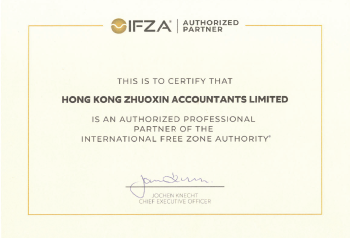
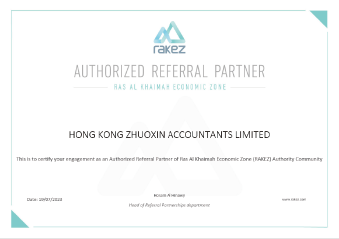
Entity charter drafting involves drafting the Memorandum of Association (MOA) and Articles of Association (AOA). These foundational governance covenants require formal notarization. Digital notarization infrastructure under the Dubai Courts now allows non-resident directors to execute foundational deeds through secured identity validation channels. Institutional advisory teams like Zhuo Xin coordinate the precise synchronization of cross-border notarizations, board resolutions, and legal apostilles to satisfy domestic evidentiary standards.
Every commercial entity must link to verifiable physical operations. Virtual offices are tightly controlled under strict activity classifications, requiring mainland LLCs to execute verified commercial tenancy contracts through the Land Department's Ejari platform. The concluded file—comprising physical tenancy contracts, notarized MOAs, initial approvals, and partner passport verification—is filed with regulatory bodies to yield the final operational license.
Commercial Licensing Frameworks and External Clearances
Commercial activities determine the licensing path, minimum capital obligations, and post-incorporation audits. The DET directory catalogs several thousand discrete operational sub-segments, which coalesce into four major categories.
- Commercial Licenses: Covering import-export cycles, wholesale product brokerage, logistics routing, and regional retail operations.
- Professional Licenses: Applying to intellectual service vocations, advisory engagements, software development, design, and non-goods consultancy. Historically structured around civil contracts, these can now be chartered as single-owner or multi-partner limited liability operations.
- Industrial Licenses: Mandatory for processing raw materials, component manufacturing, compounding, packaging, and industrial product fabrication. Issuance requires physical industrial warehousing, environmental clearances, and factory audits.
- Tourism and Maritime Licenses: Highly specialized regimes under specific administrative scrutiny governing destination agencies, charter operations, and leisure assets.
Certain sectors mandate external governmental sign-offs preceding formal licensing. Financial service firms must satisfy strict vetting protocols executed by the Securities and Commodities Authority (SCA) or the Central Bank of the UAE. Healthcare delivery models involve detailed inspections through the Dubai Health Authority (DHA). Engineering, construction, and educational verticals fall under specific technical review regimes managed by their respective federal ministries.
Fiscal Architecture, Corporate Taxation, and Compliance Governance
The historical perception of the United Arab Emirates as a completely tax-free zone transitioned toward institutional harmonization via modern taxation systems. Navigating company formation and business setup in dubai uae requires designing corporate structures that withstand international audit rigor.
Federal Decree-Law No. 47 of 2022 on the Taxation of Corporations and Businesses establishes a standard 9% federal corporate tax on taxable business income exceeding AED 375,000 (roughly USD 102,000). Taxable earnings beneath this ceiling face a 0% rate to support nascent operations. Small Business Relief frameworks further accommodate emerging micro-entities generating revenues below prescribed thresholds over defined fiscal years.
Free zone enterprises can obtain the Qualifying Free Zone Person (QFZP) designation, preserving a 0% rate on qualifying income derived from transactions with offshore entities, foreign markets, or other free zone operators. Preserving this preferential fiscal profile demands complete compliance with statutory conditions:
- Maintaining adequate physical economic presence within the geographical boundaries of the free zone enclave.
- Deriving pure qualifying revenue without compromising designated de minimis ceilings through prohibited mainland transactions.
- Complying directly with international arm's-length standards outlined in OECD Transfer Pricing Guidelines.
- Drafting and maintaining audited financial records prepared according to International Financial Reporting Standards (IFRS).
Value Added Tax (VAT) applies at a flat 5% on qualifying commercial exchanges within the state, per Federal Decree-Law No. 8 of 2017. Businesses must register for VAT once taxable sales pass the mandatory threshold of AED 375,000 across a consecutive twelve-month sequence, while voluntary registration activates at AED 187,500.
Regulatory frameworks also monitor international tax transparency. Organizations running specified core functions must meet Economic Substance Regulations (ESR) through adequate operational expenditures, verified board presence, and domestic management. Cabinet Resolution No. 58 of 2020 requires private organizations to construct transparent registers identifying the Ultimate Beneficial Owner (UBO), preventing regulatory exposure from concealed ownership layers.
Opening Corporate Bank Accounts and Financial Positioning
Opening an institutional bank account presents a notable administrative milestone during cross-border market entry. The Central Bank of the UAE strictly enforces anti-money laundering (AML) and counter-terrorist financing (CFT) mandates, leading regional and foreign financial institutions to apply deep due diligence procedures to prospective accounts.
Tier-1 banking groups evaluate commercial transparency, ultimate equity ownership, management track records, and operational clarity. Accounts held by non-resident beneficial owners undergo thorough examination regarding fund origins and wealth creation history.
Financial gatekeepers scrutinize three primary operational requirements:
- Substantive Corporate Presence: Entities with dedicated, physical offices pass due diligence checks faster than organizations operating via flexi-desks or virtual workspace arrangements.
- Documented Commercial Pipelines: Institutions look for evidence of operational readiness, including supplier contracts, client engagement letters, invoices, and detailed six-month corporate bank statements from foreign parent companies.
- Jurisdictional Alignment: The geographical footprint of an enterprise's counterparties must match its stated operational focus. Cross-border capital pathways passing through blacklisted nations or opaque transit jurisdictions invite immediate account rejection.
Specialized cross-border consulting organizations, including Zhuo Xin, guide leadership teams through the preparation of compliant corporate profiles. Aligning cross-border governance documents with underwriting expectations streamlines account issuance and prevents extensive operational stalls.
Workforce Mobility, Residency Frameworks, and Operational Scaling
Securing the right commercial registrations enables broad human capital mobilization. Modern residency programs allow multinational organizations to base core leadership directly within the UAE.
The standard investor residency visa allows shareholders to establish lawful residency within the UAE for two-year intervals, renewable subject to continued shareholding status and entity compliance. Corporate personnel qualify for renewable employment visas under their operating entity's official establishment card.
Long-term operational resilience often leverages the ten-year UAE Golden Visa ecosystem. Executives, exceptional technology specialists, key contributors, and substantial property or business capital contributors can secure decade-long residency without third-party local sponsorship. This framework shields workforce planning from the routine administrative friction of traditional visa renewals.
Mainland establishments must comply with federal human capital mandates through the Wages Protection System (WPS). This automated salary transfer network confirms that corporate personnel receive pay via authorized banking channels according to Ministry of Human Resources and Emiratisation (MOHRE) agreements. Failing to process required payroll via the WPS triggers automated administrative holds across commercial registrations, pausing an enterprise's capacity to modify licenses, renew leases, or obtain additional employee visas.

Strategic Evaluation: Structuring Your Dubai Expansion
Careful structural planning before committing foreign capital clarifies the strategic decisions surrounding company formation and business setup in dubai uae. Far from a uniform administrative transaction, entry demands tailoring corporate architecture to your operating requirements, capital structure, and end markets.
Mainland arrangements demand slightly higher capital deployment for dedicated real estate leases and ongoing administrative filings. However, they eliminate cross-border barriers to internal trade, state procurement, and broader domestic commercial ventures. Free trade zones offer streamlined processing, simplified equity transactions, and structural exemptions, but require careful management to preserve corporate tax relief and manage trade barriers with mainland counterparties.
Long-term operational performance rests on proper capitalization, coherent tax strategies, and strict adherence to the country's developing compliance requirements. International enterprises that address these legal, fiscal, and operational considerations early can establish an efficient commercial base in Dubai to support broader trade across global markets.
Frequently Asked Questions (FAQ)
What defines a Qualifying Free Zone Person under the UAE Corporate Tax regime?
A Qualifying Free Zone Person (QFZP) is an incorporated entity operating within an approved free trade zone that satisfies specific conditions laid out in Federal Decree-Law No. 47 of 2022. The enterprise must maintain substantial local presence, earn qualifying income from eligible wholesale transactions, preserve arm's-length transfer pricing protocols, avoid election into standard corporate tax obligations, and maintain fully audited annual financial statements prepared under IFRS guidelines.
Can a foreign enterprise retain 100% equity in a mainland UAE company?
Amendments to the UAE Commercial Companies Law via Federal Decree-Law No. 32 of 2021 authorize 100% foreign ownership for over a thousand discrete commercial and industrial pursuits. While historical mandates required an Emirati individual to hold a minimum 51% stake, that model now applies primarily to designated activities bearing strategic security, defence, or key community impact.
What are the primary documentation prerequisites for institutional bank account applications?
Corporate financial institutions require fully certified organizational files. These encompass the valid Commercial Trade License, the registered Memorandum of Association, Certificate of Incumbency, passport and Emirates ID credentials for authorized signatories and major shareholders, detailed corporate profiles outlining trading activities, recent parent company bank records, and physical lease tenancy agreements (Ejari).
How does the Ultimate Beneficial Ownership (UBO) regulation affect private entities?
Cabinet Resolution No. 58 of 2020 mandates that every commercial establishment in the mainland and commercial free zones compile, update, and officially register a beneficial ownership ledger. Any individual directly or indirectly controlling an equity stake equal to or exceeding 25% of the entity's voting rights, or exerting ultimate corporate control, must be disclosed to the commercial registry to deter illicit fund concealment.
What is the operational difference between a Branch Office and a Subsidiary?
A Branch Office represents an extension of an existing parent entity, lacking autonomous legal personality. The parent company retains unmitigated civil, contractual, and financial liability for the branch's operations, and the branch must execute the same trade profile as the parent. A Subsidiary operates as a legally distinct, independently capitalized Limited Liability Company (LLC), shielding the foreign parent from exposure incurred directly by the subsidiary.
What timeline applies to formalizing an enterprise registration process?
Completing standard commercial incorporation in a digital free zone usually requires five to ten business days. Mainland incorporations requiring specialized ministerial clearances, extensive notarizations, or bespoke commercial lease agreements typically require between three and six weeks to finalize trade licensing, immigration files, and institutional bank underwriting.
Initiate Your UAE Market Entry
Navigating cross-border corporate expansion demands institutional rigor, precise governance, and direct alignment with dynamic federal commercial regulations. Zhuo Xin delivers comprehensive advisory services to guide international enterprises through every phase of company formation and business setup in dubai uae. Our advisors handle jurisdictional audits, complex corporate structuring, regulatory filings, and corporate banking solutions. Contact our enterprise advisory team to schedule an initial consultation and review your expansion plans in the United Arab Emirates.