 Time: 2026-08-14
 Author: Zhuoxin Enterprise
 Source: Zhuo Xin
 Views: 196
According to the data of the "2022-2026 Post-epidemic UAE Investment Environment and Development Potential Report" written and released by the UAE Division of Global Impression Investment Analysis, the UAEs economic pillar industry is oil. The UAE is mainly based on oil production and petrochemical industries, and also has natural gas liquefaction, aluminum smelting, plastic products, building materials, clothing and food processing industries, while focusing on developing economic diversification. While developing the petrochemical industry, the UAE government has made it its top priority to develop a diversified economy, vigorously develop tourism, trade and transportation, and the financial industry, and increase the proportion of non-oil revenue in GDP.
Oil industry: Oil production still plays a pivotal role in the UAE economy. The UAEs oil production is mainly in the Emirate of Abu Dhabi. At present, Abu Dhabis oil industry is in a mature stage. According to the current production and reserves, it can continue to produce for 120 years. In contrast, the Emirate of Dubai is also in a depleted period, with reserves as the priority. According to the current production and reserves, it can be mined for up to 20 years. The rest of the stadiums are in the development, exploration, and oil prospecting stages.
Natural gas industry: Although the UAE has a huge amount of natural gas, due to the large domestic demand for natural gas, most of it is produced by re-injection. At the same time, most of the oil fields are acidic, which are difficult to exploit and costly. At present, it is still highly dependent on natural gas imports. Natural gas is imported from Qatar through the Dolphin Project. In order to meet the growing domestic demand for natural gas, ADNOC (Abu Dhabi International Petroleum Investment Company) invested US$20 billion to launch the Abu Dhabi Western High Acidity Gas Field Development Project.
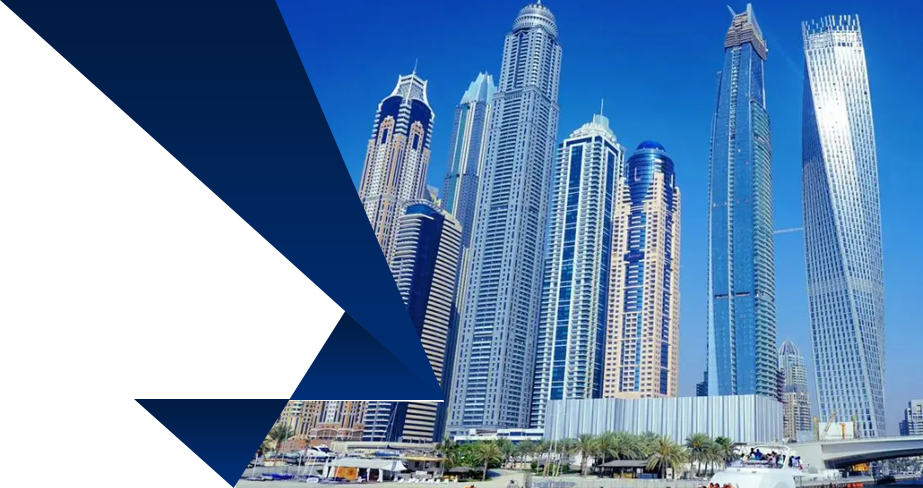
Dubai City Night View Non-oil Industry: The UAE is working hard to promote the development of non-oil industries such as petrochemical metallurgy, processing and manufacturing, new energy, finance, and tourism. The proportion of non-oil industries in economic growth is steadily increasing, and the status of other regional trade, finance, and logistics hubs is further strengthened. In 2019, the non-oil industry contributed about 70% to the UAEs gross domestic product (GDP). In 2020, the non-oil industrys contribution to GDP rose to 71.3%, and continued to rise to 72.3% in 2021. Calculated at constant prices, the UAEs GDP achieved a growth of 3.8% in 2021, exceeding the World Banks earlier forecast of 2.1%.
Financial industry: The UAEs financial system is relatively complete. Institutions engaged in financial business in the UAE include various financial institutions such as banks, securities companies, financial investment companies, financial consulting companies, and financial intermediary companies. As of 2022, the total number of active registered companies in the Dubai International Financial Center (DIFC) has increased to 4,377, an increase of 20% from 3,644 in 2021. In 2022, 1,084 new companies were registered in DIFC, which is the first time in history that the number of newly registered companies in an annual period has exceeded 1,000. Among the 4,377 entities settled in DIFC are: 17 of the worlds top 20 banks, 25 of the worlds top 30 global systemically important banks, 5 of the worlds top 10 insurance companies, 5 of the worlds top 10 asset management companies, and many of the worlds leading law firms and consulting firms.
Re-export trade: Dubai Port is one of the worlds three largest re-export centers after Singapore and Hong Kong, China. In 2016, 2017 and 2018, the total re-export trade of the UAE reached 1.04 trillion dirhams (about 28.34 trillion US dollars), accounting for 25% of the total trade. According to the Federal Competitiveness and Statistics Center (FCSC), the re-export volume in 2018 and 2019 was approximately 521 billion dirhams and 516.5 billion dirhams, respectively, accounting for 44.2% and 44.8% of the total exports of the year. In 2020, despite the economic slowdown caused by the epidemic, the total re-export trade volume decreased compared with the previous two years, but still reached 467.5 billion dirhams (about 127.56 billion US dollars). The re-export volume accounted for 46.5% of the total exports (1.003 trillion dirhams) and 54.3% of the total imports (860.1 billion dirhams) that year, indicating that the UAE is still the most important re-export, warehousing and distribution center in the region.
Other industries include: aluminum smelting, real estate and construction, cement, aviation, pharmaceuticals, plastics, textiles and clothing, etc.