 Time: 2026-08-14
 Author: Zhuoxin Enterprise
 Source: Zhuo Xin
 Views: 791
Choosing where to establish your business in the UAE is a critical first step. The choice between a Free Zone and the Mainland is often the biggest dilemma for entrepreneurs. Understanding the difference between Free Zone and Mainland setups can save you time, money, and future complications.
This breakdown will highlight the seven most important distinctions. We will cover ownership, market access, taxes, and more. By the end, you will know exactly which environment suits your business ambitions. Lets dive into the core differences between Free Zone and Mainland operations.

1. Legal Jurisdiction and Governing Laws
The fundamental difference between Free Zone and Mainland companies lies in their governing laws.
Mainland companies fall directly under the legal and regulatory framework of the UAE Federal Law. They are overseen by the Department of Economic Development (DED) in the respective emirate, such as Dubai or Abu Dhabi.
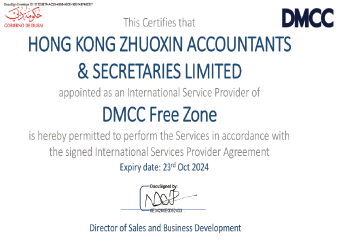
Free Zones, however, are special economic zones with their own independent regulatory authorities. Each Free Zone has its own set of rules and governance. For example, the DMCC (Dubai Multi Commodities Centre) and DIFC (Dubai International Financial Centre) have their own legal statutes and courts.
This difference between Free Zone and Mainland means that a Free Zone company operates under a specialized, often more streamlined, legal system. This can be beneficial for specific industries like finance or media.
2. Business Ownership and Sponsorship
This is perhaps the most well-known difference between Free Zone and Mainland structures.
For a Mainland company, the historic rule required a local UAE national to own 51% of the business. However, this has significantly changed. Following recent reforms, 100% foreign ownership is now permitted for most business activities on the UAE Mainland.
In a Free Zone, 100% foreign ownership has always been the standard. There is no requirement for a local sponsor or partner. This allows international investors to retain full control and ownership of their enterprise.
While the gap has narrowed, this difference between Free Zone and Mainland is still crucial. It affects control, profit distribution, and long-term decision-making.
3. Geographic Market Access and Operations
Where you can do business is a major practical difference between Free Zone and Mainland entities.
A Mainland company has the right to conduct business directly anywhere in the UAE local market. It can trade goods and services across all seven emirates without any restrictions. This makes it ideal for businesses targeting the wider UAE consumer and B2B market.
A Free Zone company is generally licensed to operate within the geographical confines of its specific Free Zone and internationally. To conduct business directly with the UAE Mainland market, it typically needs to involve a third-party distributor or agent. Alternatively, it can establish a separate mainland presence.
This difference between Free Zone and Mainland market access is a key deciding factor. If your primary customers are within the UAE, a Mainland setup is often more straightforward.
4. Tax Obligations and Incentives
Taxation is an area where the difference between Free Zone and Mainland is evolving but still distinct.
Mainland companies are subject to the UAEs Federal Corporate Tax law. This means they are required to register for Corporate Tax and comply with its regulations. The standard statutory rate is 9% on taxable income exceeding AED 375,000.
Free Zone companies can benefit from a 0% Corporate Tax rate on qualifying income. This is part of the Free Zones incentive package to attract foreign investment. To qualify for this, a company must meet specific conditions and not conduct business with the UAE Mainland.
This difference between Free Zone and Mainland tax treatment is a significant advantage for export-oriented and international service businesses operating from a Free Zone.
5. Cost of Setup and Renewal
The financial investment required showcases a clear difference between Free Zone and Mainland company formation.
Setting up a Mainland company can often be more capital-intensive. Costs include trade name registration, initial approval, license fees, and potentially higher office rental deposits. If you opt for 100% ownership, the capital requirements might be higher for certain activities.
Free Zones are known for their competitive and transparent fee structures. They often offer attractive package deals that bundle license, registration, and sometimes even office space. This can make the initial setup faster and more predictable.
This difference between Free Zone and Mainland costs makes Free Zones particularly appealing for startups and SMEs with limited initial capital.
6. Office Space and Physical Presence Requirements
Requirements for a physical office highlight another operational difference between Free Zone and Mainland.
Mainland companies are usually required to have a physical office or warehouse space. The size of this space can also influence the number of employee visas the company is eligible to apply for.
Free Zones offer much more flexibility. While they also require a legal address, the options are diverse. Companies can choose from flexi-desks, executive offices, or warehouses within the Free Zone. Some Free Zones even offer virtual office solutions without a physical desk.
This flexibility in the difference between Free Zone and Mainland premises can lead to substantial cost savings and operational agility for Free Zone businesses.
7. Business Activities and Licensing
The scope and nature of permitted business activities present a final key difference between Free Zone and Mainland.
Mainland licenses, issued by the DED, cover a very broad range of commercial, industrial, and professional activities. A Mainland company can often obtain a license that covers multiple, related activities under a single entity.
Free Zone licenses are often more specific and tailored to the theme of the zone. For instance, a technology Free Zone may focus on IT licenses, while a media Free Zone caters to publishing and production. Adding a new, unrelated activity might require a separate license.
This difference between Free Zone and Mainland licensing means you must ensure your desired activity is perfectly aligned with the chosen Free Zones offerings.
Frequently Asked Questions (FAQs)
Q1: What is the main difference between Free Zone and Mainland regarding ownership?
A1: The main difference is that while 100% foreign ownership is now possible in both, it is the standard and historic norm in Free Zones. On the Mainland, it is a more recent reform and may have specific conditions for certain activities.
Q2: Which is better for Corporate Tax benefits: Free Zone or Mainland?
A2: Free Zones generally offer better immediate tax benefits with a 0% Corporate Tax rate on qualifying income. Mainland companies are subject to the standard UAE Corporate Tax regime, though with a high exemption threshold.
Q3: Can a Free Zone company sell products directly in Dubai Mall (Mainland)?
A3: No, not directly. A Free Zone company cannot engage in direct sales within the UAE Mainland market. It must sell its products to a Mainland distributor or retailer who then sells them locally.
Q4: Is it more expensive to start a Mainland company or a Free Zone company?
A4: Typically, starting a Mainland company involves higher initial costs due to office space requirements and potentially higher license fees. Free Zones often have more affordable package deals, making them cheaper to start.
Q5: Do both Mainland and Free Zone companies require a physical office?
A5: Yes, both generally require a legal address. However, Mainland requirements are often stricter regarding the physical office space. Free Zones provide more flexible options like flexi-desks and virtual offices.